2026-10-23 ·
How to Fix Cold Spots in London Flats During Winter
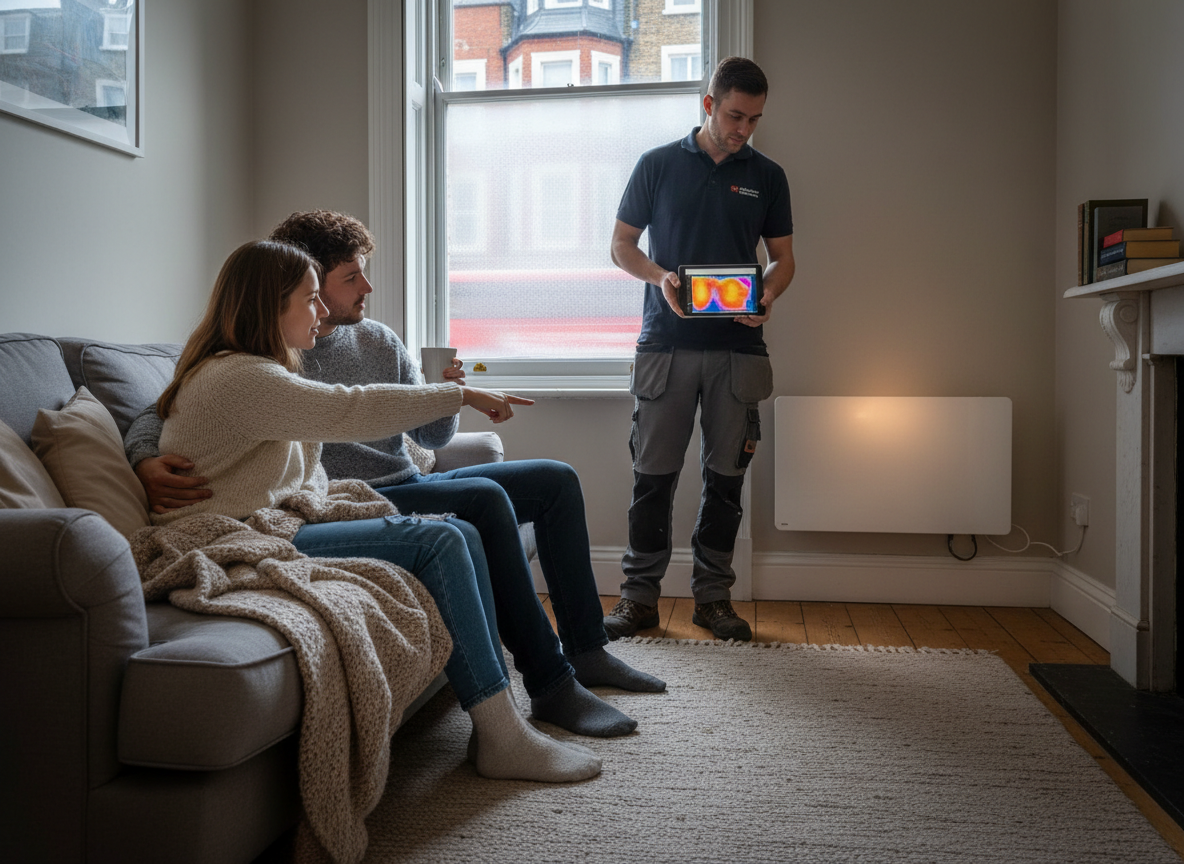
Cold spots in London flats during winter most often clear up once you balance radiator valves, seal obvious drafts around sash windows and confirm the electric system is delivering consistent output across all rooms. Many properties built before 1930 or in the 1960s-70s still rely on older electric radiators or storage heaters whose output drops when one element fails or when air pockets form in the system. Start by walking each room with a simple digital thermometer at 9 pm on a cold evening; a difference of more than 3 °C between floor and ceiling usually points to either a stuck valve or missing insulation behind the radiator. Once you locate the coldest spot, turn the radiator off at the wall, bleed it if it has a bleed screw, then reopen the valve fully and note whether heat returns evenly within 20 minutes. If the radiator stays cold on one side after bleeding, the issue is likely a failed element or blocked internal channel that requires an electric heating repair service rather than a DIY fix.
Checking Radiator Performance in Typical London Flats
London flats range from converted Victorian terraces in Islington to 1970s concrete blocks in the Docklands, and each stock type creates different cold-spot patterns. In pre-1914 buildings the original cast-iron radiators often sit under single-glazed sash windows that lose heat rapidly once outdoor temperatures fall below 5 °C. Post-war flats frequently have electric panel heaters mounted on internal walls, leaving the external wall and floor slab noticeably colder. Walk the flat at night with the heating running and feel the surface temperature of each radiator with the back of your hand; a working unit should feel uniformly warm from top to bottom within 15 minutes of switching on. If one radiator remains cool while others are hot, close the lockshield valve on the warmer units by two full turns, wait 30 minutes and recheck the cold one. This simple balancing step equalises flow and removes most cold spots caused by short-circuiting water or stored heat in the system. Keep a note of which valves you adjusted so you can fine-tune again after a week of normal use.
Addressing Insulation Gaps Common in the London Area
Many London flats still have minimal loft insulation or none at all above top-floor rooms, and external walls in converted houses often lack cavity fill. These gaps create persistent cold spots along the ceiling line and on the party wall side of bedrooms. Check the loft hatch first; if you can see the ceiling joists, add at least 270 mm of mineral wool or rigid boards to bring the flat in line with current building standards. Around windows, apply self-adhesive foam tape to sash meeting rails and fit heavy thermal curtains that extend to the floor. In ground-floor flats, lift one corner of the carpet to inspect the floorboards; if cold air rises between the boards, lay 100 mm of insulation board beneath a new plywood overlay. These measures reduce the temperature difference between rooms by 2–4 °C and allow the electric heating system to maintain 20 °C with lower running times. For flats in conservation areas such as parts of Hampstead or Greenwich, always check whether listed-building consent is needed before altering external windows or adding external wall insulation.
When to Call Electric Heating Installers
If balancing valves and basic insulation work do not remove the cold spot within a week, the electric radiator or storage heater itself needs attention. Failed elements, corroded connections or a faulty thermostat are common after 12–15 years of service in London’s damp winters. Contact electric heating repair services for a same-day visit; technicians carry replacement elements for the most common 1.5 kW and 2 kW models and can often restore full output the same afternoon. In cases where the whole system is undersized for the flat’s heat loss, an electric radiator installer can survey the property and recommend high-heat-retention models sized to each room. These units store heat in ceramic cores and release it steadily, cutting temperature swings that create cold spots. Readers dealing with similar issues in period properties may also find useful detail in Maintaining Storage Heaters in Victorian London Homes and Reducing Condensation with Electric Heating in London Properties.
Maintaining Even Heat Through Winter
Once cold spots are resolved, keep the system balanced by bleeding radiators at the start of each heating season and wiping dust from panel heater fins monthly. Set the room thermostat to 20 °C rather than boosting individual radiators, which prevents short cycling and uneven wear. In flats with storage heaters, charge them overnight on the cheaper Economy 7 tariff and release heat gradually during the day; adjust the input dial so the core is fully charged by 7 am. If you live in a top-floor flat in areas such as Romford or Enfield, add extra loft insulation before the first frost to stop the ceiling acting as a heat sink. These small seasonal tasks keep the electric heating system working evenly and reduce the chance of cold spots returning mid-winter.