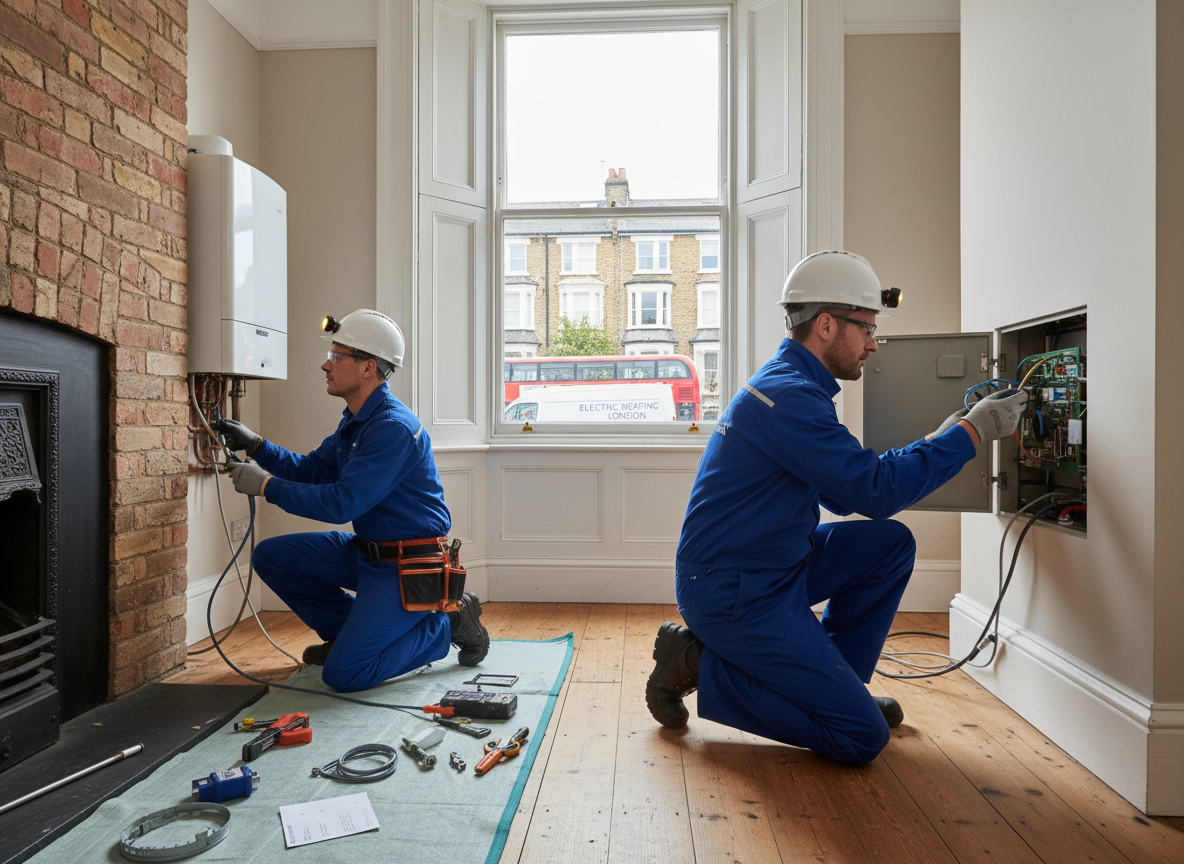
London's housing stock ranges from Victorian terraces in areas like Hackney to post-war concrete blocks around Tower Hamlets. Installing electric heating here often means working with outdated consumer units that cannot handle modern loads without upgrades. Installers must account for shared risers in converted mansion blocks and plan cable routes that avoid listed features or party walls. Weatherproofing external connections is essential given frequent damp winters and wind exposure on higher floors of estates near the Thames.
Part P of the Building Regulations requires notification for most fixed electric heating work in London dwellings. Skipping this step risks failed inspections or insurance issues when properties change hands. In denser neighborhoods such as Islington or Southwark, access for larger storage heaters or underfloor mats can be restricted by narrow stairwells and lift sizes. Electric systems also need careful placement to avoid overloading circuits already serving kitchen appliances common in compact flats.
Direct Electric Heating Solutions works from 1 Canada Square and responds across Greater London day or night. Technicians assess existing wiring, calculate heat loss room by room, and recommend panel heaters or night-storage units matched to the property's insulation level. All work includes testing of protective devices and clear handover notes on timer settings suited to variable London electricity tariffs.
Technician insight
In London, the thing that catches most people out with Electric Heating Installers near me is the state of the original wiring in Victorian terraces around Hackney and Islington. Many still run on old rubber cables that cannot safely carry the continuous load of new heaters, forcing an unplanned consumer-unit upgrade before any heaters can be fitted.
Electric Heating Upgrade in a Tower Hamlets Flat
A resident in a 1960s block near Canary Wharf reported cold rooms and high bills from old night-storage heaters. Inspection showed overloaded circuits and damaged cabling in the shared riser. New dedicated circuits were installed from the flat's board to modern panel heaters sized for each room. The system now runs on cheaper overnight tariffs with even temperatures throughout the day.
How it works
- 1
Initial Site Assessment
Visit the property in London to inspect the consumer unit, wiring routes, and room layouts while noting any conservation-area restrictions.
- 2
System Design and Quote
Calculate required output, select suitable electric heaters, and provide an itemised quote that factors in any necessary consumer-unit upgrades.
- 3
Installation and Connection
Run new circuits, mount heaters or mats, and connect to the distribution board following Part P requirements.
- 4
Testing and Handover
Perform full electrical tests, demonstrate controls, and supply documentation for the homeowner's records.
Pricing
Upfront quotes based on property size, existing wiring condition, and chosen system type.