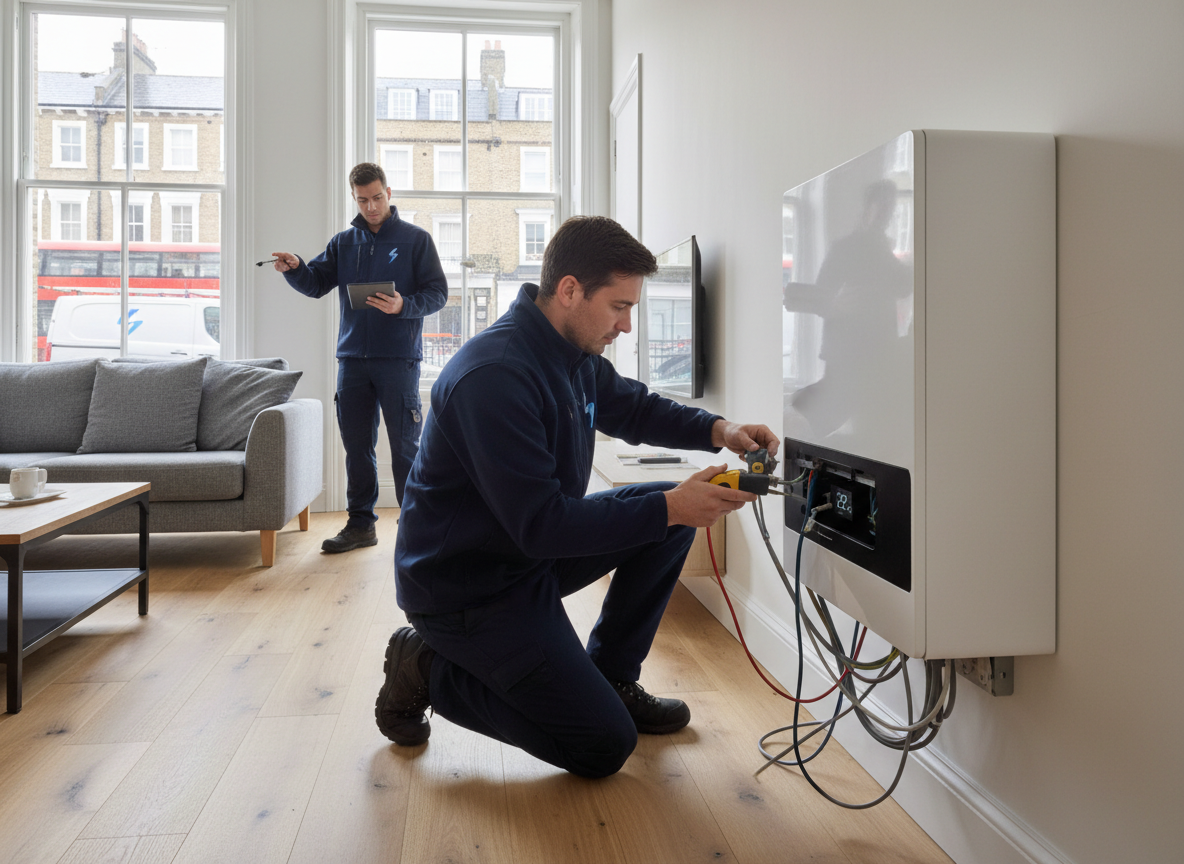
London's housing stock ranges from pre-1900 terraces in areas like Islington and Hackney to 1960s purpose-built flats in the Docklands and newer Canary Wharf developments. Electric heating systems must integrate with existing consumer units that often predate modern Part P regulations, requiring careful assessment of cable runs and earthing before any new radiators or panels are fitted. Cold snaps in January and February increase demand on systems that were originally designed for milder conditions, so installers routinely upgrade insulation around pipework in lofts and behind skirtings to prevent heat loss in these older properties.
Ground conditions in the London area include clay-heavy soil that expands and contracts with seasonal moisture changes, affecting ground-floor installations where underfloor heating elements are laid. Installers check for existing damp-proof courses and ensure new cabling avoids proximity to rising damp in basements common around the Thames estuary. Three-phase supply is rarely available in residential streets outside central commercial zones, so single-phase systems must be balanced across circuits to avoid tripping breakers during peak winter use.
Building control notifications are required for most new electric heating circuits in Greater London, and work must comply with current IET wiring regulations without disturbing listed features in conservation areas such as parts of Greenwich or Kensington. Experienced crews carry spare high-load contactors and wireless thermostats suited to intermittent heating patterns typical in commuter properties that stand empty during weekdays.
Technician insight
In London, the thing that catches most people out with 24/7 electric heating installer is discovering that many 1930s semis around the E14 postcode still have rubber-insulated wiring that must be replaced before any new high-draw heaters can be added, especially when the consumer unit is tucked under the stairs in a damp hallway.
Night Callout in Canary Wharf Flat
Heating failed in a 1990s riverside apartment during a December cold spell. Inspection revealed a tripped breaker and undersized cable feeding the existing storage heaters. New dedicated circuits were installed from the consumer unit and modern panel heaters fitted. The system was tested and left running before morning rush hour.
How it works
- 1
Initial Assessment
Technician attends the property in London to inspect existing electrics, measure rooms and note insulation levels.
- 2
System Design
Load calculations are completed and a panel or storage heater layout is prepared to suit the building's age and wiring capacity.
- 3
Installation
New circuits are run, heaters mounted and connected, with all work carried out to current regulations.
- 4
Testing and Handover
Full system test, client walkthrough and documentation left on site before departure.
Pricing
Upfront quotes issued after inspection; final cost depends on property age, number of rooms and any required electrical upgrades.