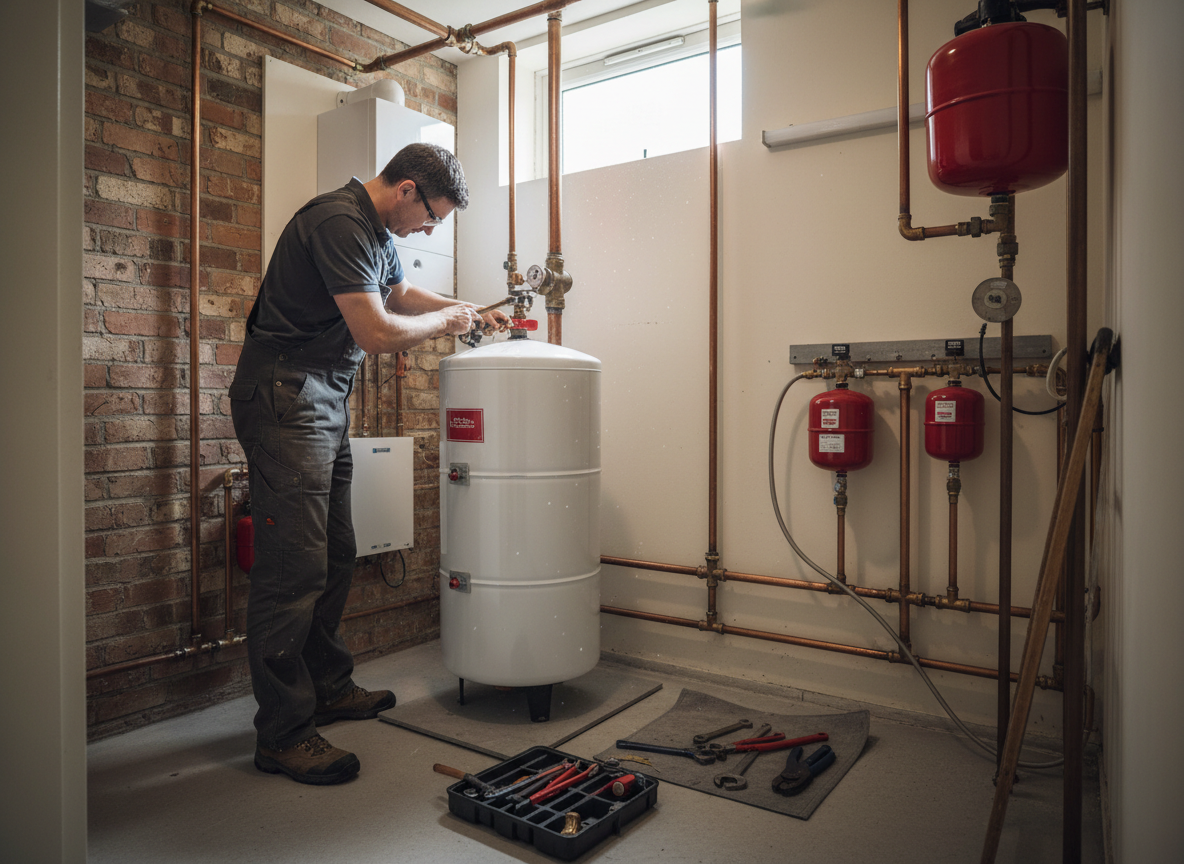
London's mix of Victorian terraces, Edwardian semis and post-war flats creates distinct challenges for water cylinder work. Many properties retain narrow service voids and original gravity-fed systems that demand careful cylinder sizing to avoid pressure issues downstream. Electric models often replace older immersion setups where gas is unavailable or restricted, particularly in converted warehouses around Docklands and Southwark. Installers must account for the capital's frequent winter temperature swings that increase hot water demand while testing existing pipe insulation for efficiency.
Edge cases appear regularly in high-rise blocks near Canary Wharf where headroom and access hatches limit cylinder dimensions. Modern unvented cylinders require proper discharge pipe routing that older buildings rarely accommodate without additional trunking through multiple floors. Cold water mains pressure varies sharply between Thames-side zones and higher ground in Hampstead, affecting flow rates after installation. Technicians check for limescale buildup common in hard-water districts before final commissioning to prevent early element failure.
Regulatory checks focus on electrical isolation and earthing continuity in older wiring common across inner London boroughs. Cylinder placement must leave clearance for future maintenance access, a detail often overlooked in compact utility cupboards. In areas with high water table influence near the river, floor-level units need additional corrosion protection on base plates. Proper commissioning includes verifying thermostat calibration against the building's typical occupancy patterns to reduce unnecessary cycling during milder shoulder seasons.
Technician insight
In London, the thing that catches most people out with Water Cylinder installer is the state of the incoming mains in Victorian terraces around Hackney and Islington where low pressure forces extra pump work that changes the whole layout.
Docklands Flat Cylinder Replacement
A one-bedroom flat near Canary Wharf reported inconsistent hot water from an ageing immersion cylinder. Inspection showed corroded pipework and insufficient cupboard space. We fitted a compact electric cylinder with revised discharge routing through the existing service void. The system now delivers steady supply without pressure complaints.
How it works
- 1
Site Assessment
Visit the property to measure available space, inspect existing pipework and electrical supply, and note any access restrictions typical in London conversions.
- 2
Cylinder Selection
Match capacity and type to household demand, considering electric tariff options and the building's insulation levels across different London microclimates.
- 3
Installation
Position and connect the new cylinder, reroute pipework where needed, and integrate controls while maintaining access for future servicing in tight London utility spaces.
- 4
Testing and Handover
Pressure test the system, check electrical connections, and demonstrate operation to the homeowner before leaving the site.
Pricing
Upfront quotes issued after site visit; final cost depends on cylinder size, access difficulty and any pipework modifications required in older London stock.